Emma's Little Sister
Ever since her parents told her a little sister was coming, Emma had imagined a thousand games they’d play together: sandcastles, drawings, bedtime stories told in two voices.
But when Clara finally arrived, it wasn’t at all how Emma had pictured it. The baby slept almost all day, cried in the middle of the night, and Emma’s parents never seemed to have time for anything else.
“Nobody plays with me anymore,” Emma complained one evening, sitting on her bed with her arms crossed.
Her mother sat down beside her, tired but with a patient smile.
“You’re right, we’ve been a bit busy lately,” she said. “But you know what? There’s a very important job that only you can do, not even me or Dad can do it instead of you.”
“What job?” Emma asked, curious despite her pout.
“Big sister,” her mother replied. “Clara needs someone to show her how to be happy in this family. And you’re the only one who can teach her that.”
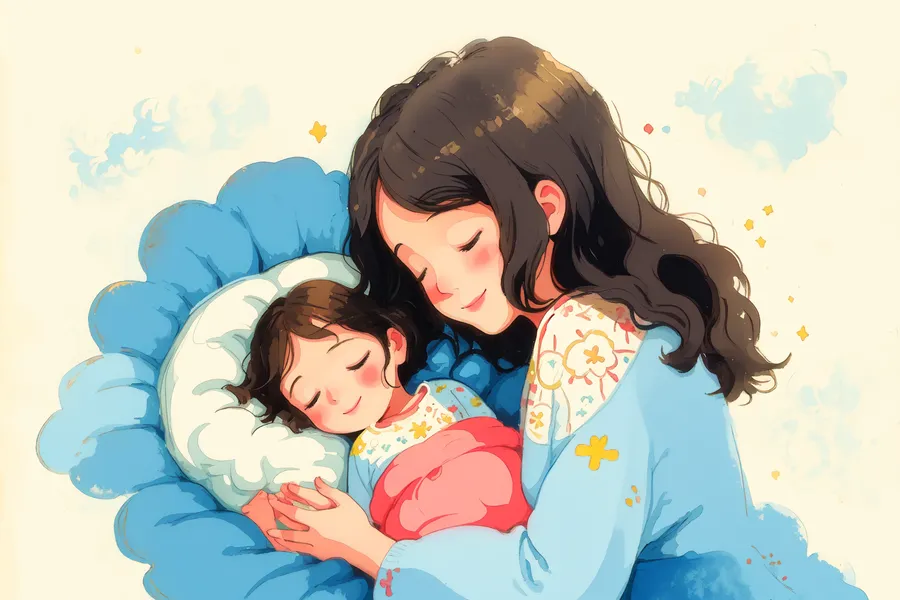
Emma thought about it for a couple of days. Then, one morning, she walked slowly over to the crib, where Clara was awake, watching her with two big curious eyes.
“Hi,” Emma whispered to her. “I’m your big sister. I’ll show you the best spots in the garden, as soon as you’re big enough.”
For the first time, Clara smiled at her — a small, toothless smile, but a real one.
From that day on, Emma began spending every free moment near the crib, telling Clara stories no one else was listening to yet, singing songs she made up on the spot, showing her drawings one by one.
They weren’t the games Emma had first imagined. They were better: because every day, Clara learned something new, thanks to her.
And when, months later, Clara said her very first word — not “mama,” not “dada,” but “Emma” — Emma understood that this big-sister job was, after all, the best game of all.